
close
Choose Your Site
Global
Social Media
Views: 10 Author: Site Editor Publish Time: 2025-12-15 Origin: Site


Manufacturers around the world are increasingly focused on reducing operational costs while maintaining consistent product quality and output. For companies that package food, snacks, or other fast-moving consumer goods, the vertical form fill seal machine has become one of the most efficient solutions to meet both production and financial goals. At UTMOSTPACK, we believe that understanding where your savings come from—and how to measure them—can transform the way you evaluate automation investments. This article provides a comprehensive ROI checklist, showing practical steps to calculate financial returns from improved packaging speed, reduced material waste, and lower labor costs. By following this structured approach, decision-makers can assess how a VFFS system directly influences overall profitability and long-term competitiveness.
Every minute on a production line counts. One of the clearest financial benefits of a vertical form fill seal machine is the increase in packaging speed. Traditional semi-automatic processes often struggle with bottlenecks at various points—film alignment, filling accuracy, or sealing inconsistency. By contrast, a VFFS system integrates all these stages into one continuous motion, forming, filling, and sealing pouches at high speed without manual handling.
To properly evaluate your ROI, it’s essential to collect key performance metrics before and after installation. Some of the most valuable data points include:
Cycle time per package: The time taken to complete one full pouch.
Scrap rate: The percentage of wasted film or product during packaging.
Labor hours per shift: The total human hours needed for production.
Throughput: Total number of finished bags produced per hour or per day.
Once you have this data, it becomes clear how automation drives cost savings. For example, even a small improvement in cycle time—say, two seconds faster per bag—can produce thousands of additional units per shift. Reducing waste from 4% to 1% over a year may translate into tens of thousands of dollars in material savings.
Beyond numbers, the consistency achieved with a VFFS machine has long-term financial implications. When every bag is correctly sealed and accurately filled, there’s less product giveaway, fewer customer complaints, and a stronger reputation for quality. In competitive industries such as snacks, dried fruits, and frozen goods, consistent packaging helps maintain consumer trust while lowering warranty or replacement costs.
Film optimization is a crucial yet often underestimated factor in determining packaging ROI. Every roll of film represents a significant portion of your packaging expense, and any inefficiency in usage or sealing precision directly affects your bottom line. The vertical form fill seal machine is designed to address exactly this challenge.
By accurately controlling film feed and tension, the system minimizes film waste and ensures each pouch is cut and sealed at the correct position. This precision reduces the number of defective bags caused by misalignment or improper sealing. Optimizing film width can also have an immediate financial effect—by selecting the smallest possible width that still meets product and seal integrity requirements, you can increase the number of pouches produced per reel.
Reel yield improvement is another area of measurable gain. When a VFFS system reduces the number of changeovers by improving reel utilization, you save not only material but also downtime. Less frequent changeovers mean higher operational efficiency and reduced labor hours associated with roll replacement.
Furthermore, modern machines allow you to work with thinner, high-strength films. This opens the door to adopting eco-friendly or recyclable materials that maintain strength and barrier properties while reducing total material consumption. For businesses seeking to improve their sustainability profile, this combination of cost efficiency and environmental responsibility offers a competitive edge.
UTMOSTPACK’s VFFS systems are equipped with advanced film tracking technology and precision temperature control, which together ensure optimal sealing performance even at high speeds. Over time, this reduces the hidden costs of rejects, rework, and excess film usage—boosting your packaging ROI significantly.
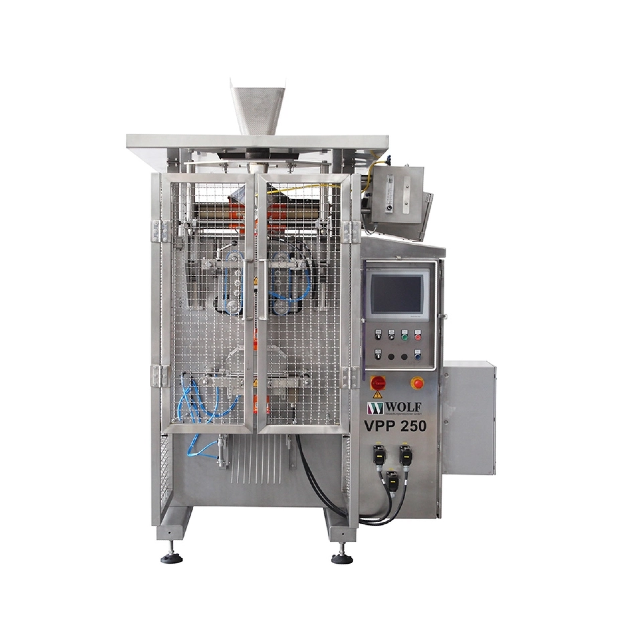
One of the most visible outcomes of automation is reduced labor dependency. A vertical form fill seal machine can take on multiple stages of packaging that previously required several operators. This not only minimizes labor costs but also reduces human error, improves safety, and enhances productivity per square meter of factory space.
Labor savings can be calculated in two main ways. First, by reducing the number of operators per line. Second, by increasing output per worker. Suppose your existing setup requires four operators per shift, and after automation, the same throughput can be achieved with two. The savings in wages, training, and management overhead accumulate rapidly, especially across multiple production shifts.
Floor space is another critical consideration. A vertical machine’s compact footprint allows you to reconfigure your production layout more efficiently. Freed-up space can be used for quality control, secondary packaging, or even to accommodate an additional production line—effectively increasing plant capacity without new construction costs.
Automation also contributes to better working conditions. Fewer repetitive manual motions reduce fatigue-related mistakes and workplace injuries. The result is not only lower compensation claims and absenteeism but also higher morale and retention among workers. Stable, skilled staff further enhance efficiency by maintaining steady output quality and equipment care.
With UTMOSTPACK’s user-friendly interface and intuitive control systems, even operators with limited technical training can manage the machine effectively. This accessibility reduces the need for extensive retraining and ensures that productivity gains are achieved almost immediately after installation.
While productivity improvements are easy to see, maintenance-related savings are often underestimated. However, they play a decisive role in real ROI. The vertical form fill seal machine is engineered for long-term reliability, but maintaining peak performance requires a structured approach.
Preventive maintenance should include regular checks of the sealing jaws, belts, cutting blades, and pneumatic components. Tracking Mean Time To Repair (MTTR) and Mean Time Between Failures (MTBF) provides valuable insight into performance stability and helps forecast spare parts needs. By managing these proactively, downtime can be reduced to a minimum.
High-quality machines like those from UTMOSTPACK feature self-diagnostic capabilities and user-friendly interfaces that alert operators to potential issues before a breakdown occurs. Remote monitoring and digital reporting further simplify troubleshooting, allowing your maintenance team to act quickly and efficiently.
Another hidden ROI driver is spare parts management. Using genuine replacement parts ensures that the machine continues to perform as designed, maintaining seal strength and accuracy. In contrast, using substandard or mismatched components can shorten machine life and cause frequent interruptions. A well-managed maintenance plan helps sustain the financial gains from automation long after the initial investment has been recovered.
In addition, uptime has a direct effect on your ability to meet delivery schedules and customer demand. Every hour of downtime avoided translates to more finished products shipped on time, improving cash flow and customer satisfaction.
Accurate ROI estimation starts with reliable data. To calculate potential savings, companies should collect the following figures:
Annual production volume: The total number of bags or packages produced each year.
Current packaging cost per unit: Include film, labor, and overhead.
Scrap rate: The percentage of wasted material or product.
Target throughput: The expected production speed of the new machine.
Labor rate: Average hourly cost per operator.
Maintenance expenses: Annual repair and replacement costs for existing equipment.
Downtime: Hours lost to breakdowns or changeovers per month.
Once these inputs are defined, you can model the financial outcome. Suppose your existing process handles 50 bags per minute with a 3% scrap rate, and the new VFFS system can reach 80 bags per minute with only 1% waste. The combination of faster output, reduced labor hours, and lower film loss can lead to a full payback within a year or two.
UTMOSTPACK assists clients by providing sample ROI worksheets and data templates that simplify this process. We help identify areas of highest potential savings, ensuring that your decision to automate is backed by solid, quantifiable evidence.
A vertical form fill seal machine is far more than a piece of modern equipment—it’s a smart investment that enhances every aspect of the packaging process. From accelerating output and cutting film waste to reducing labor requirements and maintenance downtime, it offers tangible, measurable returns that strengthen your bottom line.
UTMOSTPACK has dedicated years to refining this technology, delivering systems that balance innovation with real-world practicality. Our goal is to help manufacturers not just improve their packaging efficiency but also achieve long-term financial sustainability. By applying the ROI checklist above and gathering the right operational data, your company can uncover the true potential of automation and convert performance gains into real profit.
For a personalized ROI calculation or to learn more about how our form fill seal packaging solutions can elevate your production capabilities, contact us today. UTMOSTPACK’s team of experts is ready to assist you in achieving measurable savings, reliable performance, and a stronger competitive advantage in the global marketplace.
