
close
Choose Your Site
Global
Social Media
Views: 197 Author: Site Editor Publish Time: 2026-02-19 Origin: Site


Every minute of downtime in a packaging line can cost productivity and delay shipments. That’s why maintaining your vertical form fill seal machine isn’t just a technical task—it’s an investment in uptime, quality, and customer satisfaction. At UTMOSTPACK, we’ve seen that well-maintained equipment delivers not only better performance but also longer service life and lower total cost of ownership. This comprehensive guide outlines practical maintenance actions, troubleshooting steps, and preventive strategies that can help plant engineers and line operators keep production flowing consistently, reduce unexpected stoppages, and maintain stable output quality.
A stable production flow begins with regular inspection routines. Even the most advanced machine benefits from consistent attention to detail. Routine checks help identify wear or misalignment before they become serious problems and ensure every production shift starts on the right foot.
The film path is central to the smooth operation of any VFFS system. Ensure the roll is properly aligned, tensioned, and free from wrinkles. Misalignment often causes inconsistent sealing or material wastage. Operators should visually inspect the film path every shift and confirm that the unwind rollers move evenly without jerks or drag.
The sealing unit endures high heat and pressure, which makes it a key point of preventive care. Examine the sealing jaws and Teflon coating daily to ensure there is no residue or wear. Even a thin layer of product or dust can lead to poor sealing integrity. Cleaning the seal jaws with non-abrasive cloths and verifying pressure balance helps maintain consistent seal strength.
VFFS systems rely heavily on optical sensors to align film and control filling cycles. Dust accumulation or vibration can cause misalignment, leading to incorrect bag lengths or registration errors. Clean sensors with a dry cloth and recalibrate them weekly. Simple checks like this drastically reduce false alarms and product waste.
Compressed air is the muscle behind cutting, sealing, and pouch formation. Regularly inspect for leaks, clean air filters, and drain moisture from the air tanks. Maintaining consistent pressure levels ensures smooth machine motion and protects pneumatic valves from premature failure.
A concise checklist that includes film alignment, temperature readings, and air pressure ensures operators stay proactive. UTMOSTPACK recommends integrating this checklist into shift handovers so every operator starts with a reliable setup.
Every packaging line faces occasional malfunctions. The difference between extended downtime and quick recovery lies in knowing what to look for and how to respond effectively. Below are the most frequent VFFS faults and their proven solutions.
Symptoms: Film slipping or stopping mid-cycle.
Fix: Clean the drive belts and rollers to remove dust or oil. Adjust film tension and ensure the brake system functions properly.
Symptoms: Product quantity varies between bags.
Fix: Calibrate weigh scales and verify dosing system synchronization. If using a multi-head weigher, inspect hoppers for residue buildup.
Symptoms: Packages open easily or leak after sealing.
Fix: Check sealing jaw temperature and pressure. Clean sealing surfaces and replace worn elements. Consistent temperature control is essential for reliable seals.
Symptoms: Uneven film motion or skewed pouches.
Fix: Re-align forming tubes and guide rollers. Wrinkles often occur due to uneven film roll tension or improper roller alignment.
Symptoms: Seals contaminated with product particles.
Fix: Adjust fill timing to reduce spillage. Consider vibration feeders or product settle time improvements.
Symptoms: Bags not cut cleanly or sticking together.
Fix: Sharpen or replace cutting blades, and ensure correct pressure adjustment. Dull blades slow production and cause uneven seals.
Symptoms: Inconsistent sealing temperature or burn marks.
Fix: Verify temperature sensor calibration, replace damaged heating elements, and confirm proper insulation.
Symptoms: Printed design misaligned or offset.
Fix: Realign photoeye sensors and maintain film tension consistency. Inspect the registration mark sensor’s sensitivity.
By documenting each fault and its solution in a troubleshooting log, your team can build valuable knowledge for faster resolutions in the future.
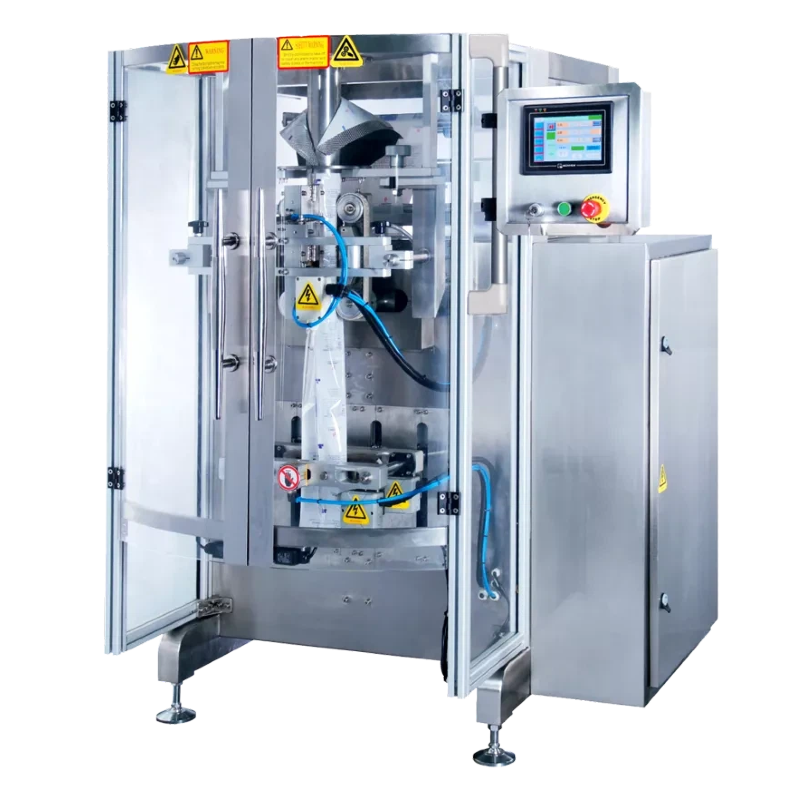
Having spare parts readily available can make the difference between a short pause and a full production halt. For long-term reliability, maintaining a parts inventory tailored to your model and operation scale is essential.
Heating elements – Vital for sealing consistency; replace before visible wear occurs.
Sealing jaws and Teflon layers – Regularly replace to maintain heat distribution.
Guide rails and rollers – Prevent uneven film movement.
Sensors and switches – Having spares ensures immediate replacement when a fault occurs.
Belts and drive motors – Replace periodically to prevent unplanned stoppages.
Store spare parts in a dry, dust-free area, labeled with installation dates. Keep a simple digital log that tracks usage cycles. UTMOSTPACK advises customers to maintain at least one full replacement set for key wear parts. This practice ensures your packaging line remains ready for any emergency maintenance without extended downtime.
Preventive maintenance transforms maintenance from reactive to strategic. Instead of waiting for problems, you anticipate them using measurable indicators.
At defined operating hour intervals—such as every 500 or 1000 hours—inspect all mechanical components. Replace seals, bearings, and lubricants. Clean internal surfaces to prevent product buildup. Review historical data to identify trends in wear and failure points.
Modern VFFS systems now integrate IoT-based monitoring that captures vibration, temperature, and motor current data. These parameters reveal early warning signs of wear or imbalance. Reviewing such data allows maintenance teams to schedule repairs at convenient times, minimizing unplanned outages.
Follow manufacturer recommendations for lubrication points and frequency. Use high-quality lubricants compatible with your specific packaging environment—especially in food applications. Calibration of sensors, load cells, and temperature probes should be included in every monthly maintenance cycle to maintain precision.
Predictive maintenance not only improves uptime but also supports sustainability goals by reducing part waste and energy use.
Deciding whether to solve an issue internally or call vendor support depends on its complexity and risk.
Operators trained by UTMOSTPACK can perform many common adjustments such as belt tightening, sealing temperature recalibration, or sensor cleaning. These small interventions prevent extended delays and empower teams to maintain daily performance.
For problems involving software errors, servo drive issues, or PLC communication faults, contacting professional service is essential. Our trained technicians use diagnostic software and original spare parts to ensure long-term reliability and warranty protection.
Simple mechanical adjustment → Fix internally
Electronic or control system fault → Contact vendor
Repeated faults or production interruptions → Schedule inspection
Under warranty or service agreement → Always use official support
Using vendor service strategically ensures your line operates within safe limits and under warranty protection while your internal team manages routine care efficiently.
A disciplined maintenance approach is the foundation of high-performing packaging operations. Keeping your vertical form fill seal machine clean, calibrated, and properly serviced ensures reliable uptime, consistent packaging quality, and reduced operating costs. UTMOSTPACK’s experience shows that factories with structured maintenance schedules and trained operators achieve higher productivity and fewer unexpected failures.
We invite you to download our free printable maintenance checklist to guide your team’s daily and weekly routines. Whether you need spare parts, technical advice, or a customized maintenance schedule for your form fill seal systems, contact UTMOSTPACK today. Our engineers are ready to help you maximize performance, extend equipment life, and keep your packaging line running at full capacity with minimal interruptions.
