
Views: 0 Author: Site Editor Publish Time: 2025-10-02 Origin: Site


A cartoning machine helps you pack products into a carton quickly and easily. You see these machines in action when products like cereal, medicine, or soap get packed for sale. Many industries use cartoning machines to save time and improve packaging. The most common industries include food and beverage, pharmaceuticals, cosmetics, and personal care.
Industry |
|---|
Food and Beverage |
Pharmaceuticals |
Cosmetics |
Personal Care |
Cartoning machines automate the packaging process, increasing speed and reducing labor costs. This efficiency allows businesses to meet high demand without hiring extra staff.
These machines provide consistent and accurate packaging, which enhances product safety and brand image. Every carton looks the same, ensuring quality control.
You can use cartoning machines for a wide range of products, including food, pharmaceuticals, and cosmetics. This versatility makes them valuable in various industries.
Automation in cartoning reduces material waste and operational costs, supporting sustainability efforts while improving profitability.
Choosing the right type of cartoner—vertical or horizontal—depends on your product and space needs. This selection helps optimize your packaging process.
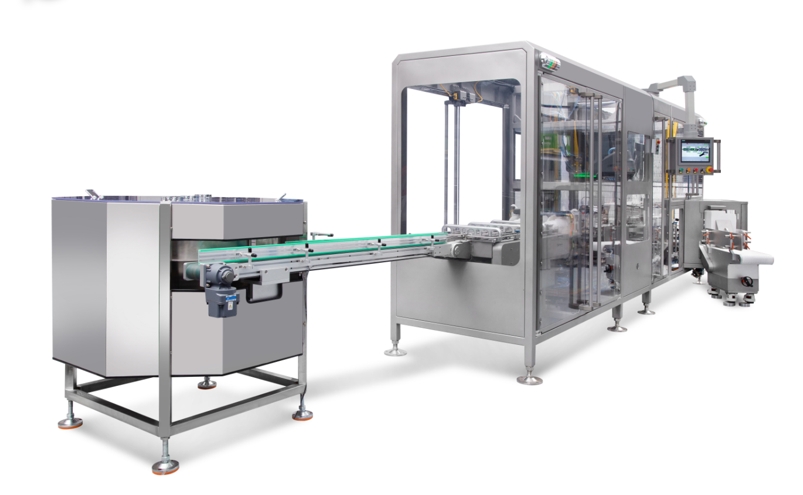
A cartoning machine helps you pack products into cartons with speed and precision. You can see how the process works in several clear steps:
Feeding: Products move into the cartoner machine on a conveyor belt.
Carton forming: The machine folds flat sheets of paperboard or corrugated cardboard into the shape of a carton.
Product insertion: The cartoner places each item inside the carton using a pick-and-place system.
Carton closing: The packaging machine seals the carton securely, using glue, tape, or other methods.
Coding and labeling: The machine prints important information, such as expiration dates or batch numbers, on the carton.
Carton ejection: The finished carton leaves the cartoning machine, ready for shipping or display.
Tip: You can pack many types of products with a cartoning machine. Common examples include food items like cereal, snack foods, and ready meals. You also see cartoner machines used for pharmaceuticals, cosmetics, dairy, bakery goods, beverages, and even single-serve coffee or sugar packets.
Cartoning machines work with different materials. You can use paperboard for lightweight products or corrugated cardboard for heavier items. This versatility lets you choose the best carton for your product, whether you need extra protection or a unique shape.
Material Type | Typical Use Cases |
|---|---|
Paperboard | Cosmetics, snacks, medicines |
Corrugated Cardboard | Beverages, bakery, ready meals |
When you use an automatic cartoner machine, you gain several advantages over manual packing. Automation makes your operation faster and more reliable.
Reduced Labor Costs: You spend less on hiring and training workers because the cartoning machine does most of the work.
Improved Efficiency: Automatic carton filling machines run continuously, helping you meet high demand without extra staff.
Enhanced Accuracy: Machines pack and label cartons with precision, reducing mistakes and waste.
Material Cost Reduction: Automated systems use less packaging material, saving money and helping the environment.
Uniformity and Quality: Every carton looks the same, which is important for brand image and product safety.
Better Working Conditions: Workers can focus on more important tasks, while the cartoning machine handles repetitive jobs.
You can pack a wide range of products with cartoning machines. These include cosmetics, pharmaceuticals, confectionery, dairy, bakery, beverage, nutraceuticals, and even items like vials, syringes, blister packs, gummies, cannabis, CBD, stick packs, yogurt, pies, and candies.
Note: Automation in cartoning not only speeds up your packaging process but also improves the quality and safety of your products. You get consistent results and can scale your operation as your business grows.
Cartoner machines play a vital role in many industries. You see them most often in pharmaceuticals, food and beverage, and consumer goods. Each sector relies on cartoning to improve packaging speed, safety, and product presentation.
You find cartoner machines in pharmaceutical plants where precision and hygiene matter most. These machines handle a wide range of products, making sure each carton protects the medicine inside. You often see automatic carton filling machines packing bottles of liquid medicine and blister packs for tablets or capsules.
Product Type | Description |
|---|---|
Bottles | Commonly used for liquid pharmaceuticals. |
Blister Packs | Used for solid dosage forms like tablets and capsules. |
Cartoning helps you meet strict safety standards. You can trust the operation to keep medicines secure and labeled correctly.
The food and beverage industry uses cartoner machines more than any other sector, holding over a third of the global market share. You see cartoners packing everything from cereal boxes to ready meals. TABASCO® brand products, for example, use high-speed horizontal cartoners to package their sauces.
Cartoner machines streamline the packaging process, enabling quick and safe packaging of food and beverage products.
Smart cartoners automate the packaging process, significantly reducing downtime and increasing packing speed.
Modern cartoners ensure secure packaging, protecting products from contamination and damage during transport.
The suction heads of smart cartoners allow for quick and efficient handling of cartons, ensuring a continuous flow of packaging.
You benefit from faster production cycles and lower labor costs. Cartoning also helps you maintain hygiene and meet safety standards.
You see cartoner machines in factories that produce everyday items. These machines handle cartons for pouches, sachets, stick packs, meal kits, frozen foods, baked goods, and more. Companies like Logitech switched to paper cartons to reduce plastic waste and carbon emissions. Nwär Skin uses dissolvable strips in recyclable cartons. HejBuddy offers lighter boxes with customizable sleeves for promotions.
Company | Description | Date |
|---|---|---|
Logitech | Phasing out plastic clamshells for FSC-certified paper cartons, reducing plastic and carbon emissions. | April 3, 2025 |
Nwär Skin | New Seid skin care products in dissolvable strips packaged in paperboard cartons, promoting recycling. | January 24, 2025 |
HejBuddy | Box is 50% lighter than traditional boxes, with customizable outer sleeve for promotions. | October 26, 2024 |
Just Born | New cartoning systems enhance throughput and improve corrugated tray packing. | August 6, 2024 |
Carlsberg | Trials a new multipack format to reduce shrink film use and enhance branding. | June 25, 2024 |
You can see how cartoning supports sustainability and branding. Cartoner machines help you pack products efficiently and safely, making your operation more reliable.
When you use a cartoner machine, you see a series of steps that transform flat cartons into finished packages. The process includes erecting cartons, filling them with products, and sealing them securely. Each step uses automatic technology to boost speed and accuracy.
You start with flat carton blanks. The cartoner picks these blanks from a magazine and forms them into boxes. Folding plates and pneumatic pushers shape the carton along pre-scored lines. Advanced systems, like servo motors, control the movement and ensure every carton forms correctly, even at high speeds. This automatic process keeps your packaging line running smoothly and reduces errors.
Flat carton blanks are picked and formed into boxes.
Folding plates and pushers shape the carton.
Servo motors provide precise control for consistent results.
Tip: Automatic carton forming lets you handle many carton sizes and shapes, adapting to different products and retail needs.
Once the carton stands upright, the cartoner loads products inside. You benefit from technologies like multi-axis servo drives and PLC control systems. These features help you fill cartons quickly and maintain high quality. Visual inspection systems check each carton for accuracy, while safety devices protect operators and equipment.
Technology | Description |
|---|---|
Multi-axis servo drive | Keeps operation stable and fast, improving efficiency and quality. |
PLC control system | Allows real-time monitoring and easy adjustments. |
High-precision transmission | Ensures accurate box opening, folding, filling, and sealing. |
Visual inspection system | Monitors packaging integrity and boxing accuracy. |
Safety protection devices | Keeps operators and machines safe during operation. |
Modern cartoning machines use modular designs and fully integrated packaging lines. You can fill cartons with bottles, blister packs, snacks, or other items, all with minimal manual labor.
After filling, the cartoner seals the carton to protect the product. You see several sealing methods, such as hot melt glue, adhesive tape, or tuck-in flaps. The machine closes the end flaps and applies glue or tape automatically. This step ensures every carton stays secure during shipping and storage.
Hot melt glue seals the top flaps.
Adhesive tape provides a strong seal.
Tuck-in flaps offer another sealing option.
Automatic carton filling machines inspect each sealed carton for defects before sending it out. You get consistent, high-quality packaging that meets safety standards.
Note: Automation in cartoning increases your packaging speed and accuracy. You reduce labor costs, improve quality control, and adapt to different product sizes with ease.
When you choose a cartoner for your packaging line, you need to know the difference between vertical and horizontal models. Each type of cartoning machine works best for certain products and packaging needs.
A vertical cartoner loads products from the top into a carton that stands upright. You see this type of cartoning machine in places where space is tight and you need to pack tall or free-flowing items. Vertical cartoners work well for automatic carton filling machines because they handle many product shapes and sizes.
Industry | Examples of Products |
|---|---|
Pharmaceutical | Blisters, oral liquids, ampoules, vials, pharmaceutical granules, plasters, ointments, aerosols |
Food | Ice cream, egg rolls, bread, coffee sachet, seasoning mix, milk powder |
Daily Chemicals | Toothpaste, soap, cosmetics, facial mask, cream, lipstick, mosquito coil |
Hardware & Electrical | Bearings, bulbs, switches, sockets, relays, chargers |
Auto Parts | Spark plugs, filters, piston rings, automotive bulbs, automotive electrical appliances |
Plastic | Plastic wrap, disposable film gloves, plastic products |
Stationery & Entertainment | Pens, staplers, staples, inkpad, glue, correction fluid, playing cards, puzzles, toys, handicrafts |
Personal Care | Paper towels, sanitary napkins, pads, cotton pads |
You can use a vertical cartoner for products that drop easily into the carton, like granules or small bottles. This design saves floor space and fits well in crowded production areas.
Tip: Vertical cartoners suit facilities with limited space and products that need bottom-loading.
A horizontal cartoner loads products from the side into a carton that lies flat. You see this type of cartoning machine in operations that pack bags, pouches, or items that must stay flat. Horizontal cartoners handle a wide range of carton sizes, from small boxes for candies to large cartons for meal kits.
Use Case Description | Product Types | Speed Range | Carton Size |
|---|---|---|---|
Suitable for bags and pouches | Bags, single/multiple pouches | Low (<30cpm) to high (>400cpm) | Small (3/4” X 3/4” X 1”) to large (12” X 12” X 24”) |
Not suitable for loose products | Individual candies | N/A | N/A |
Continuous/intermittent motion | Various products | Continuous at higher speeds, intermittent at lower speeds | N/A |
Better for 5th panel cartons | Tightly conformal products | N/A | N/A |
You can use a horizontal cartoner for products that need to be laid flat or packed in a specific orientation. This type of cartoning machine works best for wider items and cartons with special shapes.
Horizontal cartoners require more floor space than vertical models.
You get high-speed options for large-scale operations.
You can pack products in continuous or intermittent motion, depending on your needs.
Note: Both vertical and horizontal cartoners offer automatic features that boost speed and accuracy. You should match the cartoner type to your product and space requirements for the best results.
Feature | Vertical Cartoners | Horizontal Cartoners |
|---|---|---|
Product Loading | Top-loading into upright carton | Side-loading into flat carton |
Suitability | Best for tall, free-flowing products | Best for wide, flat products |
Space Efficiency | Space-saving design | Needs more floor space |
Speed | High-speed options available | High-speed options available |
Product Orientation | Good for small or loose items | Good for items needing flat orientation |
You can select a cartoner based on your product type, carton size, and available space. This choice helps you improve your cartoning process and meet your packaging goals.
You gain a major boost in efficiency when you use a cartoner in your production line. The packaging machine operates at high speeds, allowing you to fill and seal hundreds or even thousands of cartons every hour. This automation keeps your operation running smoothly and helps you meet large orders without delays. You can rely on cartoning to reduce manual labor and minimize human error. The continuous transmission feature ensures a steady flow of products, so you avoid bottlenecks and downtime.
Benefit | Description |
|---|---|
Increasing Throughput | Automation operates continuously at high speeds, drastically increasing packaging output and fulfilling larger orders. |
Reducing Manual Labor | Automation reduces reliance on labor-intensive processes, lowering costs and minimizing human error. |
Enhancing Consistency | Automation ensures precision in packing, promoting brand integrity and reducing product damage. |
Optimizing Material Usage | Machines minimize material waste, supporting sustainability goals and reducing operational costs. |
Facilitating Scalability | Machines allow easy scaling of operations to meet evolving production demands without new equipment investments. |
Tip: You can easily scale your cartoning process as your business grows, without needing to invest in new equipment.
A cartoner helps you protect your products during the packaging process. The machine packs each item snugly into its carton, which reduces movement and lowers the risk of damage during shipping. You get consistent packaging quality, so every carton looks the same and keeps your products safe. Cartoning also supports traceability, making it easier to track batches and ensure safety standards.
Improved packaging consistency
Enhanced product protection
Seamless data capture and traceability
Ability to handle a wide range of product sizes and shapes
Note: Cartoning machines help you meet industry standards for safety and quality, giving your customers confidence in your products.
You save money when you switch from manual packing to a cartoner. Automation cuts labor costs by up to 60%, and you need fewer workers to run your packaging line. Companies often report a 20% to 30% reduction in labor costs within the first year of using automated cartoning. You also spend less on training and error correction, since the machine handles repetitive tasks with high accuracy.
Cost Type | Manual Process | Machine Solution | Savings Analysis |
|---|---|---|---|
Wages | $18/hour x 6 workers | $4/hour (supervisor) | Saves $3,744/week per shift |
Training | 2 weeks per new hire | Plug-and-play operation | Eliminates $1,200 onboarding costs |
Error Correction | 5% production loss | <0.5% defect rate | Prevents $8,500/month in waste |
You also reduce material waste, which supports sustainability and lowers your operational costs. The cartoner helps you optimize your packaging process, making your business more profitable.
A cartoning machine gives you a powerful way to boost your packaging line. You gain increased efficiency, lower labor costs, and better product quality. Many industries rely on cartoning machines for their versatility and ability to handle different packaging needs. Automation helps you meet growing demand, improve safety, and reduce errors. As more companies invest in smart packaging solutions, you can count on a cartoning machine to help your business grow, protect your products, and deliver consistent results.
You can pack food, medicine, cosmetics, and consumer goods with a cartoning machine. It handles bottles, blister packs, pouches, snacks, and more. You get flexibility for many product types.
A cartoning machine automates folding, filling, and sealing. You increase output and reduce manual work. You meet large orders faster and avoid delays.
Yes, you can use paperboard or corrugated cardboard in a cartoning machine. You choose the best material for your product’s weight and protection needs.
You find cartoning machines with user-friendly controls. You adjust settings quickly and monitor performance on touch screens. Training takes less time.
You get safety guards, emergency stops, and sensors with a cartoning machine. These features protect you and keep your packaging line safe.


